· New Energy & Battery
· Metallurgy 
· Cemented Carbide
· Aluminum Evaporation 
· Glass Industry
You are here: Home » Application

Graphite Components for Industrial Applications

Explore graphite components for battery-material processing, vacuum furnaces, metal casting and tool sintering. Select your process or share your operating requirements with our team.
Choose Your Process
_Battery-Anode-Processing
Battery Anode Processing
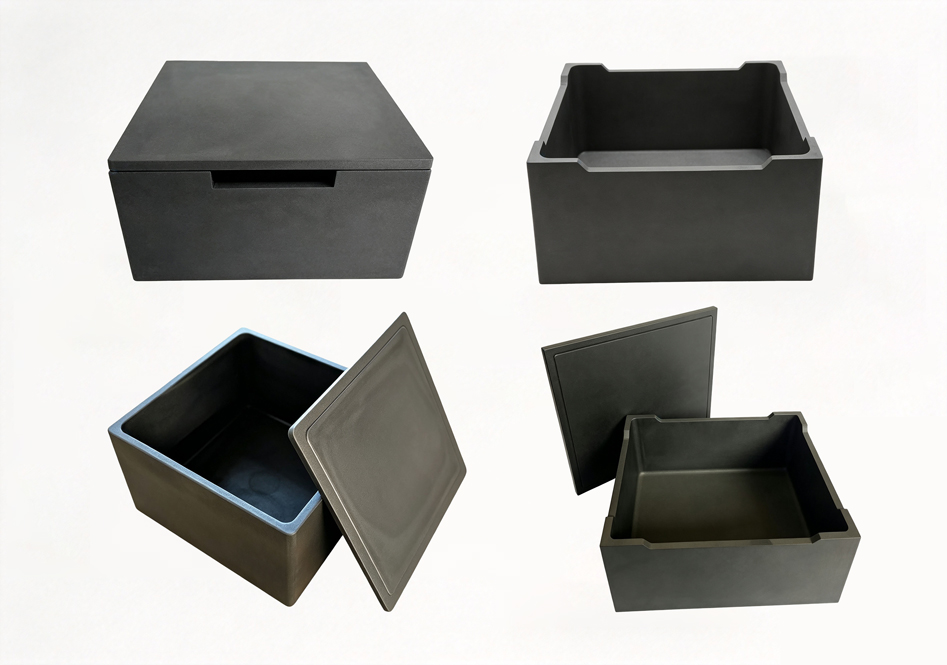
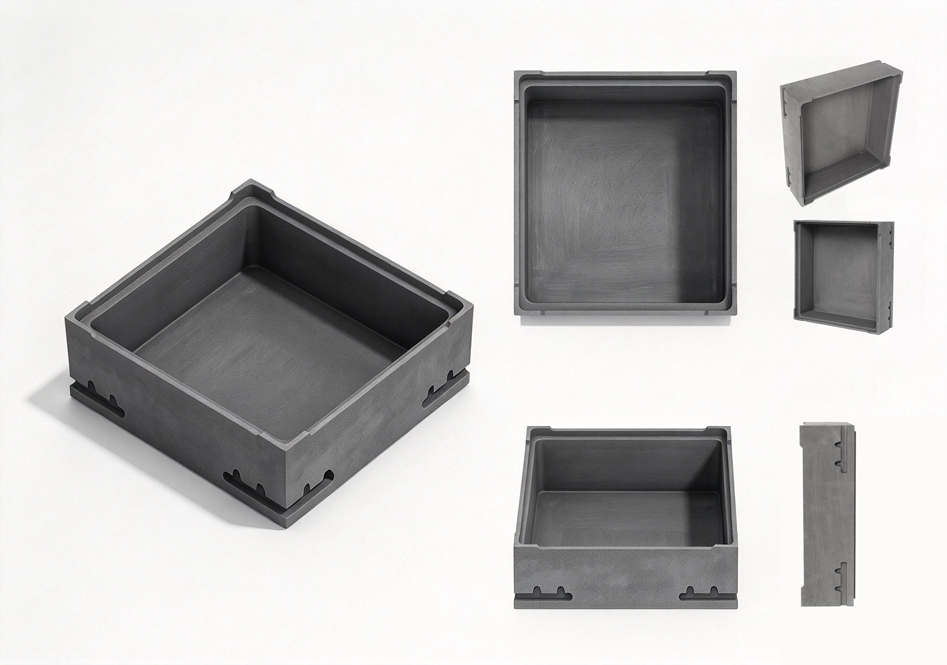
NHD graphite saggers are designed for the high-temperature heat treatment processes used in the production of artificial graphite anodes for lithium-ion batteries. This encompasses two core stages:

Primary Carbonization (Pre-carbonization)

Following the kneading and granulation of raw materials (petroleum coke/needle coke mixed with a pitch binder), the material undergoes pre-carbonization at a relatively low temperature (typically 600–900°C in an inert atmosphere). This process removes volatile components and establishes an initial carbon framework.

High-Temperature Graphitization (Core Process)

Load-Bearing Requirements

During carbonization or graphitization, saggers must support the weight of the powder material under sustained high temperatures while also withstanding lateral pressure from the furnace packing materials (such as resistance or thermal insulation materials). Consequently, the essential requirements for saggers include:

Material Composition: High-purity, high-density graphite substrates that exhibit creep resistance at high temperatures, ensuring they do not deform, collapse at the base, or crack under prolonged heavy loads.

Thermal Stability: Excellent thermal shock resistance, ensuring the saggers do not chip or leak material during rapid heating and cooling cycles or when subjected to significant temperature gradients.

Low Contamination: Low ash content and minimal metallic impurities to prevent the leaching of contaminants into the anode powder, which could otherwise degrade the electrochemical performance of the battery.

Atmospheric Compatibility: Stability within a high-purity argon inert atmosphere, with no chemical reactivity toward the anode materials or coating agents.

Loading Requirements

Designed to accommodate both automated and manual loading processes, tailored to the specific characteristics of anode powder particles:

Internal Cavity Structure: Optimized depth and aspect ratio to control the thickness of the powder bed. An excessively thick layer can lead to uneven internal temperatures and inconsistent degrees of graphitization, while a layer that is too thin reduces production capacity.

Smooth Internal Surfaces: Designed without sharp corners or pits to prevent powder from adhering to or remaining on the walls. This facilitates easy emptying and cleaning, while minimizing the risk of cross-contamination between different batches of material.

Optional Alignment Features: Can be equipped with positioning steps or interlocking mechanisms to ensure precise alignment during stacking, preventing misalignment or stack collapse.

Venting Options: Certain applications may require integrated ventilation grooves or holes to allow for the rapid escape of volatiles during heat treatment, preventing gas entrapment and the formation of blisters within the material.

Operational Requirements (Cyclic Reuse and Process Compatibility)

Thermal Shock Resistance and Longevity: Graphitization furnaces undergo complete thermal cycles—heating, holding, and cooling—requiring saggers to withstand repeated thermal shock. NHD saggers are engineered with materials selected for superior thermal shock resistance, extending their service life and reducing the cost of sagger consumption per ton of anode material.

Oxidation Resistance: Depending on the furnace atmosphere, saggers can undergo impregnation, purification, or anti-oxidation treatments to inhibit oxidative wear, particularly along the edges.

Dimensional Consistency: Uniform external tolerances across batches ensure compatibility with automated loading, stacking, and unloading production lines.

Ease of Emptying and Cleaning: Following heat treatment, saggers must undergo cooling, lid removal, and emptying. The internal surfaces are designed to be non-stick, ensuring smooth material discharge and minimizing residual anode powder.

Furnace-Specific Specifications: Sagger dimensions are tailored to the specific loading configuration of the client’s graphitization furnace. NHD offers customized specifications to maximize the loading capacity per furnace run.

Vacuum Furnaces & Heat Treatment
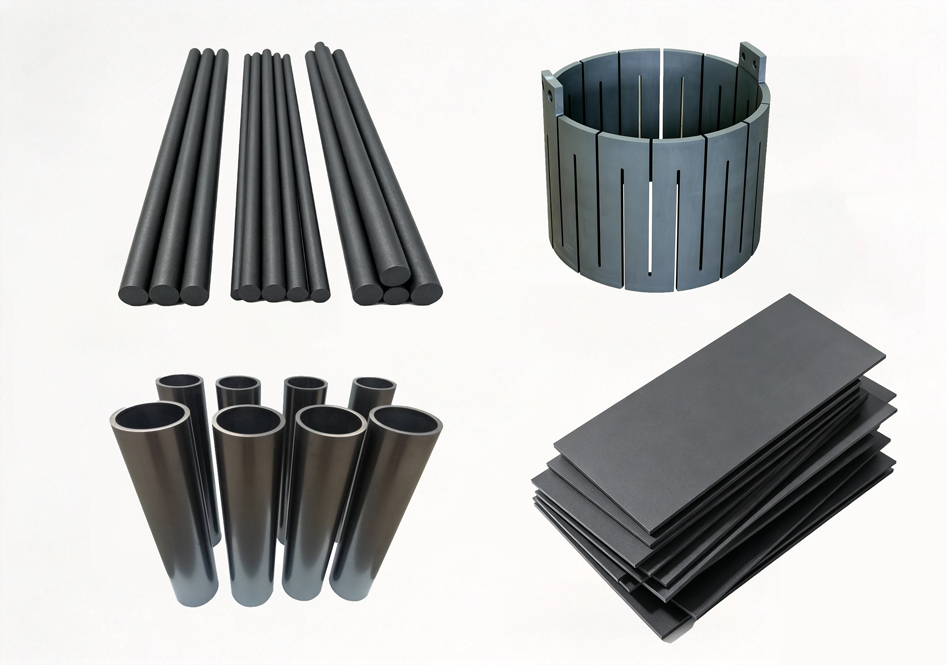
Heating Elements (Graphite heating tubes, rods, plates, and heaters)
High-purity graphite heating elements generate heat through electrical resistance. As the core heating components in high-temperature furnaces, they are widely used in photovoltaic thermal zones, sintering furnaces, and metallurgical vacuum furnaces.

Features

High-temperature resistance and excellent stability in a vacuum; suitable for long-term operation in inert atmospheres or vacuum environments. They can be machined into complex, multi-segment shapes with customized connection interfaces. Options include anti-oxidation impregnation and purification treatments to reduce volatile impurities.
Heating-Elements
Fixtures-and-Carriers
Fixtures and Carriers (Graphite boats, saggers)
Used to support and secure workpieces or powdered materials during processes such as sintering, annealing, coating, and crystal growth.

Features

Low ash content, minimizing the risk of material contamination. High thermal shock resistance, preventing cracking during repeated heating and cooling cycles. Can be machined with precise positioning features—such as grooves, clips, or steps—and engineered to withstand the combined load of the carrier itself and the material, ensuring no deformation during long-term high-temperature use.
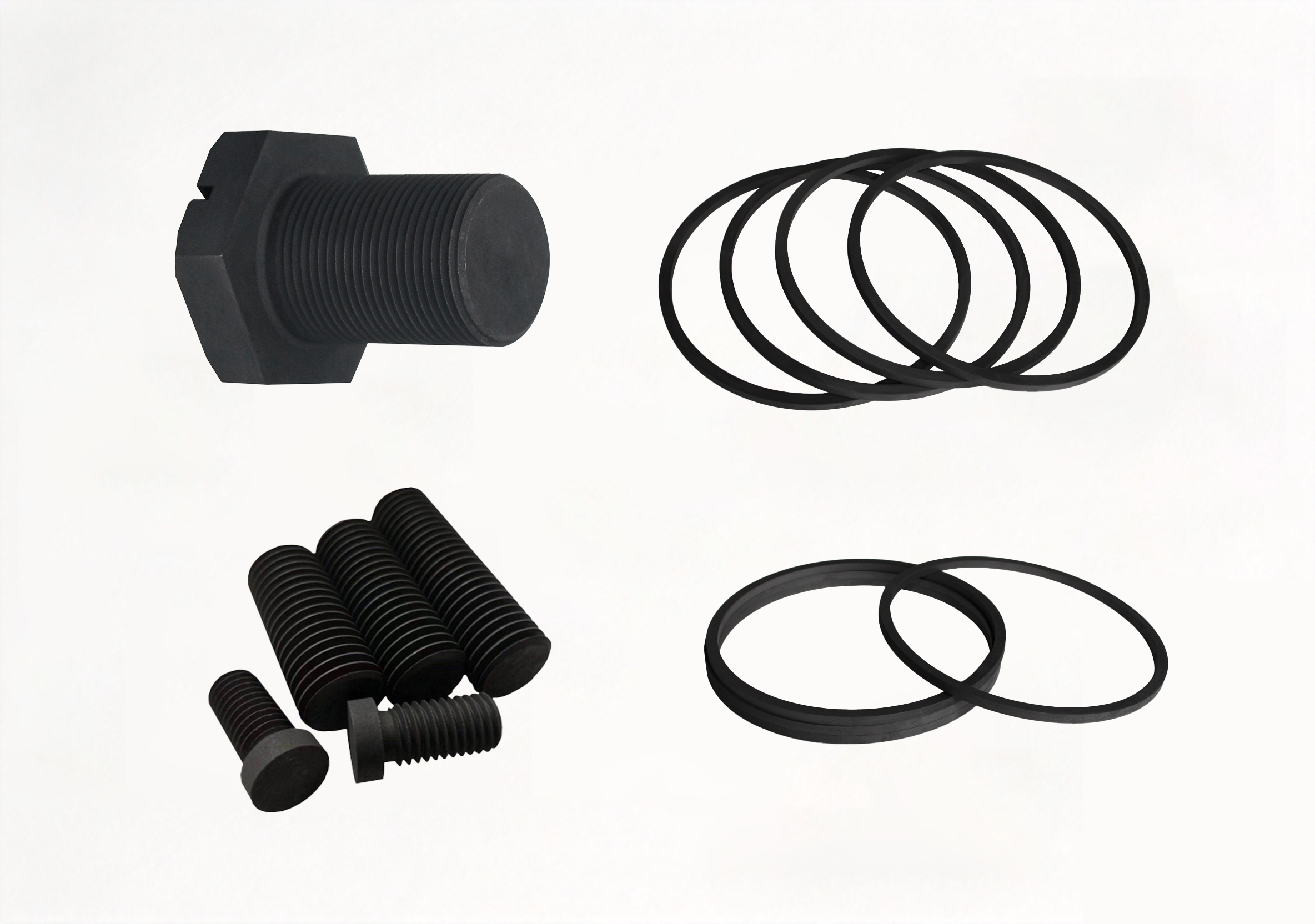
Connecting Components (Graphite bolts, rings)
Used for the assembly, fastening, joining, and electrical interconnection of graphite heating elements and heaters.

Features

The coefficient of thermal expansion matches that of the graphite substrates being joined, preventing components from seizing or loosening due to differential expansion at high temperatures. Precision-machined threads support both electrical and purely mechanical connections. These components exhibit low outgassing in vacuum environments and can be paired with metal-composite connectors to facilitate electrical transitions.
Connecting-Components
Thermal-Insulation-Materials)
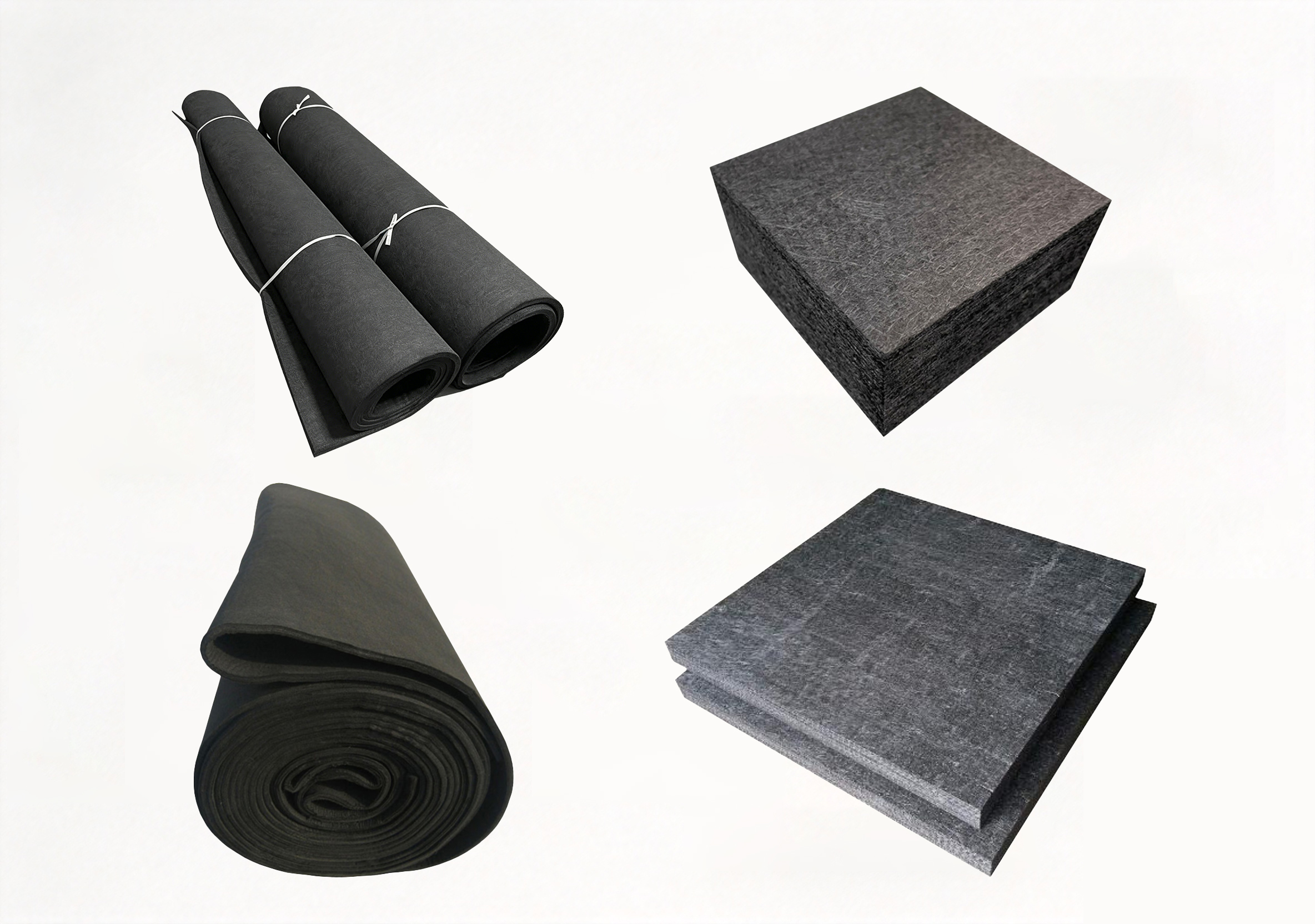
Thermal Insulation Materials (Graphite soft felt, Graphite hard felt)
These serve as the insulation layer within high-temperature thermal zones, blocking heat radiation and conduction to reduce energy consumption and protect the furnace shell.

Features

Porous structure provides thermal insulation; low thermal conductivity; does not pulverize under vacuum or inert atmosphere; available as soft felt (flexible, suitable for irregularly shaped gaps) or rigid insulation components (for structural support); minimizes dust generation to prevent contamination of products within the chamber.
Metal Casting & Melting
Graphite-Crucibles
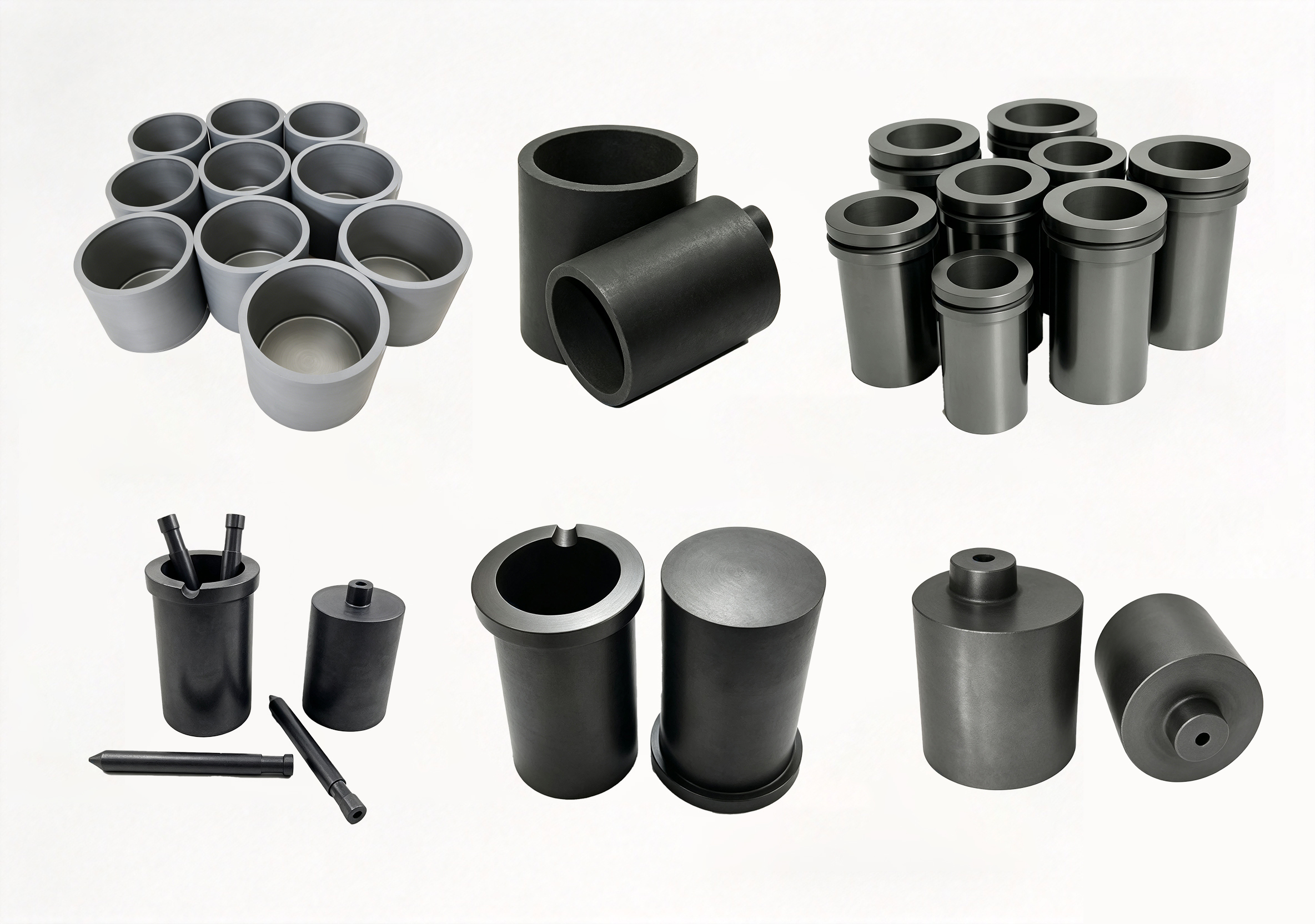
Graphite Crucibles: Melting and Holding Molten Metal
Graphite crucibles are primarily used for the melting, refining, and holding (prior to casting) of copper, aluminum, gold, silver, zinc, lead, and their respective alloys.
Typical applications include precious metal melting, laboratory analysis, vacuum induction furnaces, and continuous casting feed systems.
Application

Melting, refining, transferring, or holding molten metal before casting.

Temperature

Must be compatible with the metal's melting point and the specific furnace type; commonly used for copper, aluminum, precious metals, and high-purity metals.

Atmosphere

Requirements vary depending on whether the process takes place in a vacuum, an inert atmosphere, or ambient air. For high-temperature operations in air, oxidation-resistant coatings or a protective atmosphere may be necessary.

Material

Available in materials such as high-purity artificial graphite and isostatic graphite. For high-purity applications, ash content and volatile matter must be strictly controlled.

Structure

Can be customized based on capacity, wall thickness, pouring spout/gate positioning, and lifting/handling mechanisms. Inner surfaces can be polished or coated to minimize the adhesion of molten metal.

Inspection

Key inspection criteria include capacity, internal cavity dimensions, wall thickness, absence of cracks, ash content, surface roughness, and the fit/alignment of pouring spouts.
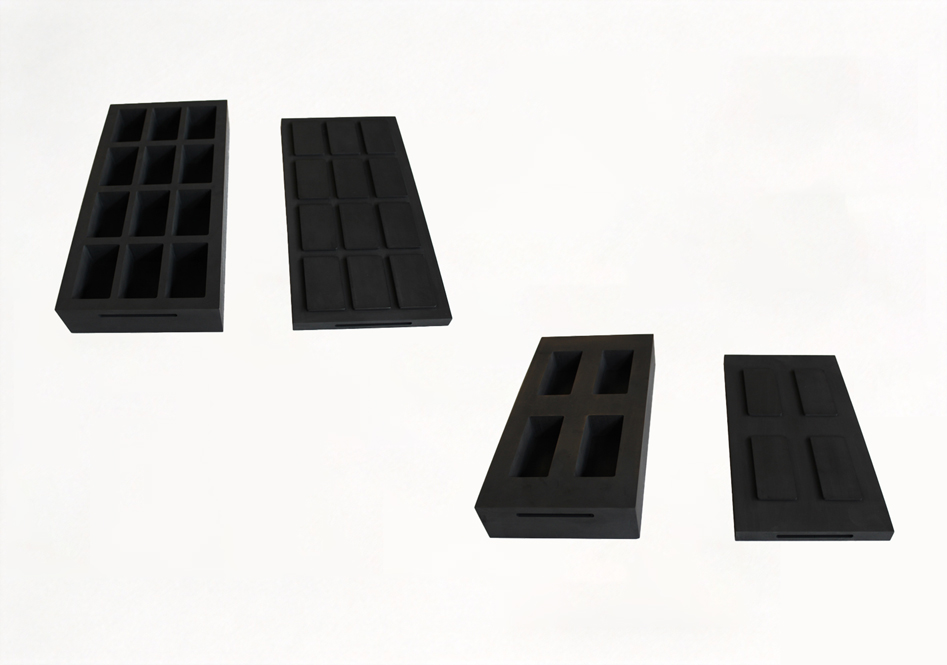
Graphite Ingot Molds: Shaping Molten Metal into Ingots
Ingot molds are used to shape molten metal into gold bars, silver bricks, copper ingots, aluminum ingots, or other specified ingot forms.
This process is a form of batch (intermittent) casting, where smooth demolding, a high-quality surface finish on the ingot, and dimensional stability are critical.
Graphite-Ingot-Molds
Application

Shaping ingots of precious metals or non-ferrous metals.

Temperature

Must withstand casting temperatures and repeated thermal cycling; requires excellent thermal shock resistance.

Atmosphere

Can be used in ambient air, protective atmospheres, or vacuum casting environments; selection should be confirmed based on the client's specific furnace type.

Material

Typically made from fine-grained, high-purity graphite to minimize metal contamination and surface defects.

Structure

Customizable configurations including single-cavity, multi-cavity, gated, and vented designs; internal cavities can be polished or coated to improve demolding performance.

Inspection

Focuses on internal cavity dimensions, chamfers, surface finish, absence of cracks, weight tolerances, and deformation after repeated use.
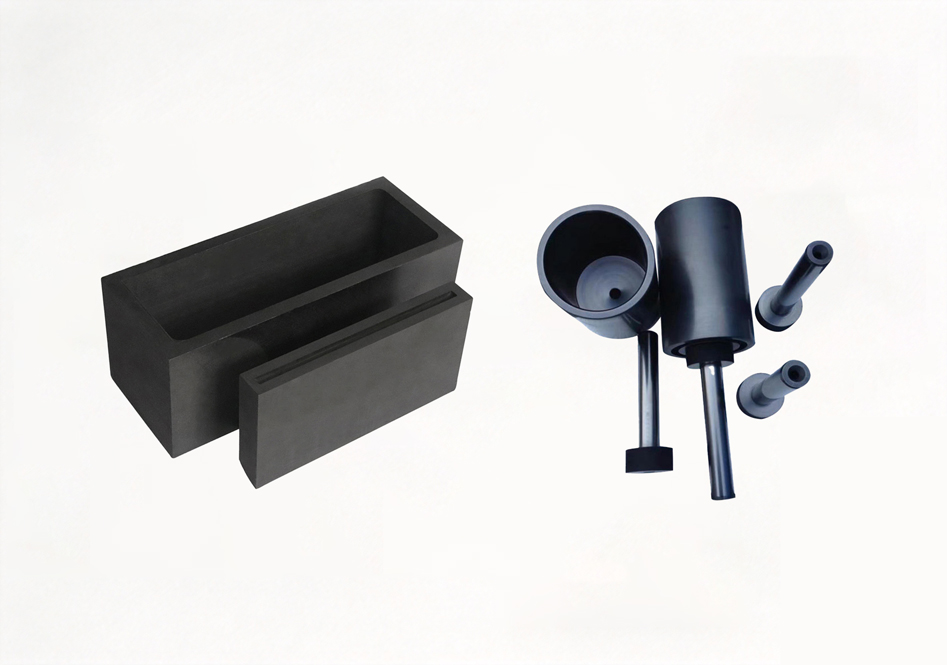
Graphite-Continuous-Casting-Molds
Graphite Continuous Casting Molds: For the continuous forming of rods, tubes, and strips
Continuous casting molds are primarily used for the continuous or semi-continuous casting of materials such as copper, copper alloys, aluminum, aluminum alloys, brass, bronze, and precious metals, directly producing rods, tubes, flat stock, or profiled shapes.
Compared to traditional ingot-based primary processing, graphite molds for continuous casting shorten production workflows, increase yield, and improve microstructural uniformity.
Application

Used as crystallizers/forming molds for horizontal continuous casting, vertical continuous casting, or semi-continuous casting.

Temperature

Subject to prolonged contact with high-temperature molten metal and forced heat exchange via cooling water; requires high thermal shock resistance.

Atmosphere

Typically involves a protective or partially protective atmosphere; considerations include the oxidation potential of the melt, zinc volatilization, and the corrosivity of lead-free alloys.

Material

Generally high-density, fine-grained graphite with high thermal conductivity; coatings may be applied when handling highly corrosive alloys.

Structure

Customizable for round rods, hollow tubes, flat strips, or complex cross-sections; designs can include single or multiple orifices and integrated cooling structures.

Inspection

Focuses on internal bore dimensions, concentricity, surface roughness, thermal conductivity stability, coating integrity, and service life.
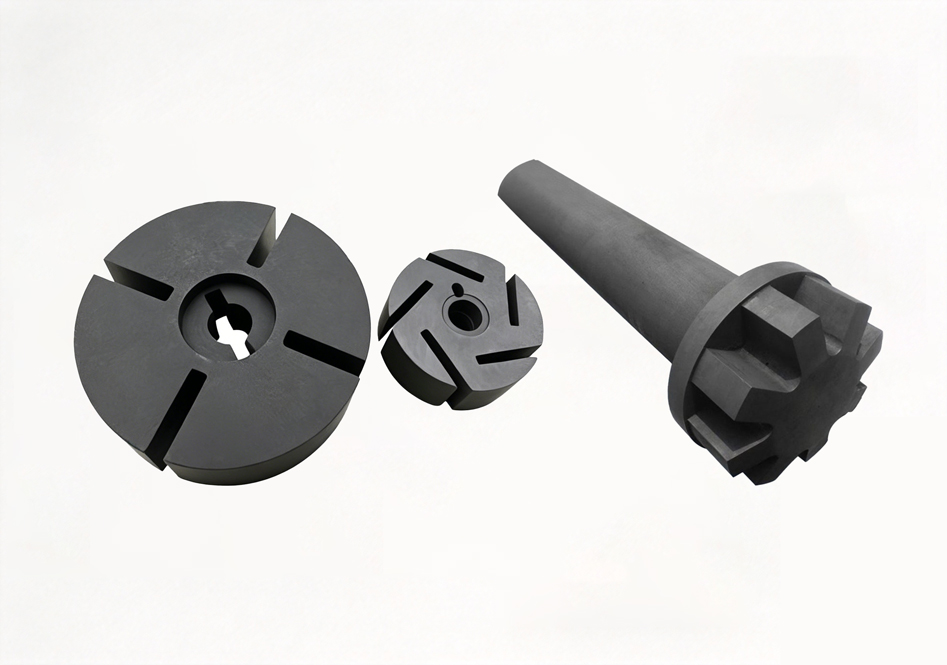
Graphite Rotors: For degassing, stirring, and purifying molten aluminum or zinc
Graphite rotors are primarily used for the in-line or off-line degassing and dross removal of molten aluminum and zinc alloys.
As the rotor spins at high speed, it breaks down nitrogen or argon gas into fine, dispersed bubbles, which carry away hydrogen and oxide inclusions from the melt, thereby enhancing the density and mechanical properties of the castings. Key Considerations for
Graphite-Rotors
Application

Refining of molten aluminum, including hydrogen removal, dross removal, stirring, and homogenization.

Temperature

Designed for operation in molten metals such as aluminum or zinc; requires high resistance to erosion and thermal shock.

Atmosphere

The refining chamber must be maintained under a nitrogen or argon atmosphere to prevent high-temperature oxidation of the portion of the rotor exposed above the melt surface.

Material

High-purity, high-density graphite; optional anti-oxidation coatings or impregnations are available to extend service life.

Structure

Customizable based on shaft diameter, impeller diameter, gas-outlet configuration, and rotational speed range; impellers are typically designed with a streamlined shape to reduce resistance.

Inspection

Critical inspection points include coaxiality, dynamic balance, precision of gas-outlet openings, surface coating integrity, absence of cracks, and dimensional accuracy of assembly interfaces.
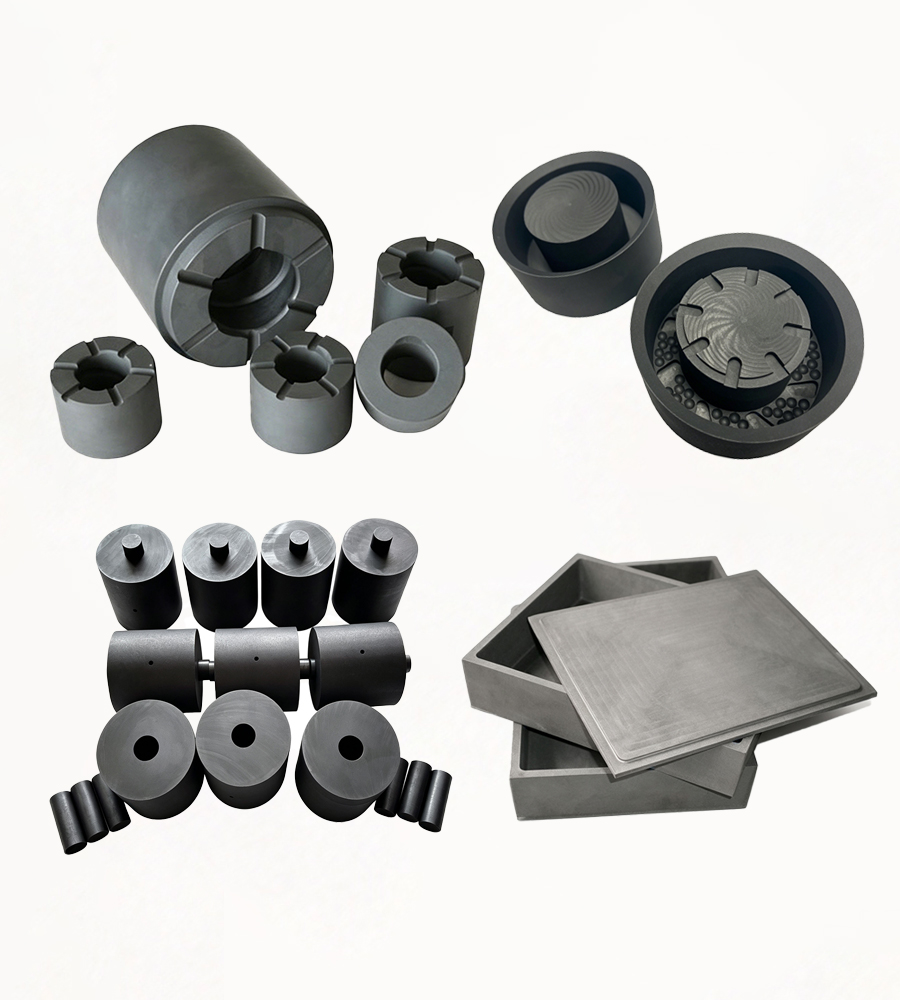
Tool Sintering
Sintering-of-Diamond-Tools2
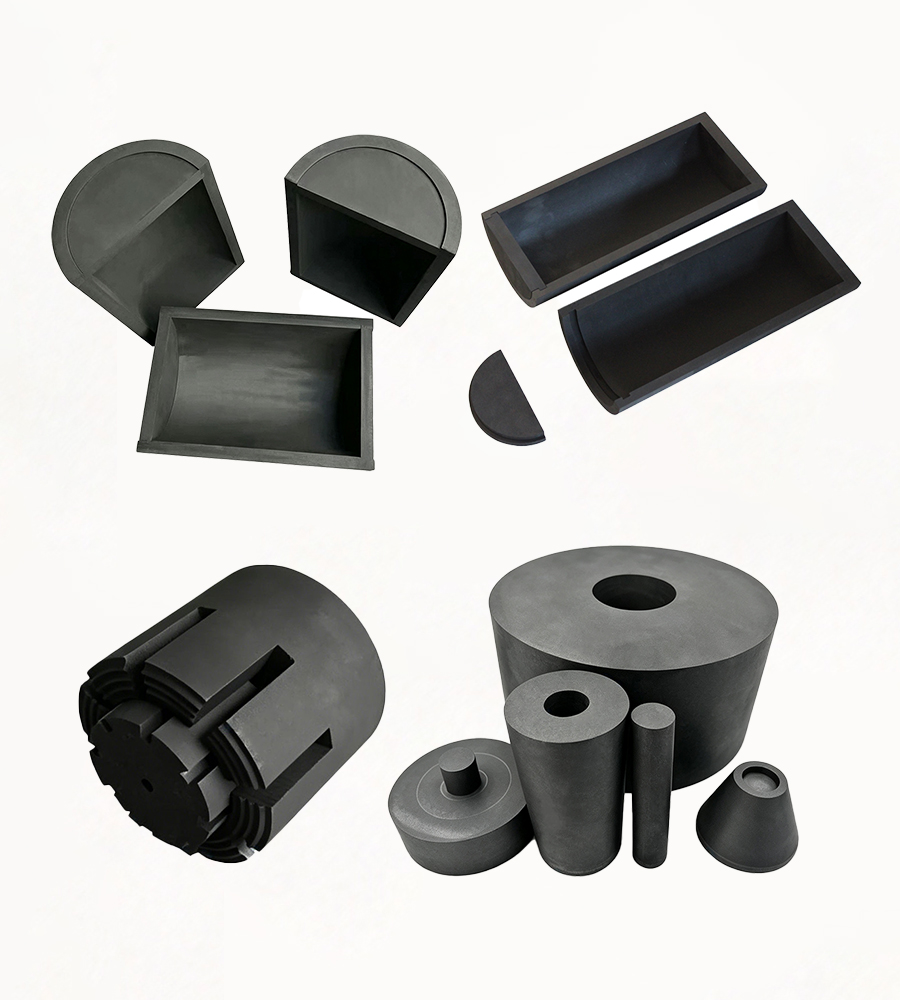
Sintering of Diamond Tools (Primarily via High-Frequency Welding or Hot-Press Sintering)
In the manufacturing of diamond saw blades, drill bits, or grinding wheels, graphite components must withstand high temperatures over very short durations, while ensuring the precise positioning of diamond segments relative to the steel core.

Graphite Molds

These define the external profile of the diamond segments (cutting tips). Typically made from high-purity, high-strength graphite, they require extremely precise internal dimensions and a high-quality surface finish to ensure consistent segment sizing and easy demolding.

Graphite Punches

Graphite Boats (Trays)

Component Interaction

Graphite boats are smoothly fed into the furnace/induction zone → Graphite molds are placed on the trays and filled with diamond powder → Graphite punches, driven by a press, apply pressure in conjunction with the molds to compact the powder (or compress the brazing filler material).

Powder Metallurgy Sintering (e.g., for cemented carbides, cermets, magnetic materials, etc.)
Powder metallurgy processes typically utilize continuous pusher-type furnaces, vacuum furnaces, or pressure-sintering furnaces. In these high-volume production environments, graphite components must offer an exceptionally long service life and maintain an extremely low ash content (to prevent contamination).

Graphite Boats (Trays)

Acting as the core carriers for workpieces, these either slide along tracks within pusher-type furnaces or are stacked in multiple layers within vacuum furnaces. High-density, high-strength graphite is typically selected as the material to ensure that the components do not fracture or collapse when loaded with large quantities of metal powder or compacts. Furthermore, exceptional thermal shock resistance is required to withstand the temperature differentials encountered when entering or exiting the furnace.

Graphite Molds

Graphite Punches

Powder-Metallurgy-Sintering
Component Interaction

During the compaction stage, the graphite punch and graphite mold fit together tightly to compress metal powder into a compact with sufficient structural integrity. Subsequently, these compacts are arranged on graphite boats (trays) and fed into a continuous sintering furnace or vacuum furnace for high-temperature sintering. Throughout this process, the graphite boats (trays) ensure that the compacts are transported smoothly and heated uniformly.

Material Selection Factors for Your Process

Custom Graphite Components for Your Application
Review of Special Dimensions
Oversized Dimensions and Equipment Constraints
If a client requires graphite components with dimensions exceeding standard specifications—such as massive heating plates or large-scale crucibles that surpass the travel limits of conventional machining centers—the primary step is to verify the operational limits of the available lathes or milling machines. If the requirements exceed equipment capacity, it is necessary to evaluate alternative approaches, such as using a multi-piece assembly design or outsourcing the machining.
Material Utilization and Cost
For parts that exceed standard blank dimensions, it is necessary to confirm the procurement lead time for raw materials and the material waste resulting from “hollowing out”. For extremely thin or extremely long parts, the review must focus on the brittleness of graphite and assess the risk of deformation during machining as well as the clamping solutions.
Tolerances and Geometric Dimensioning and Tolerancing (GD&T)
Larger overall dimensions make it increasingly difficult to control thermal expansion-induced deformation or the accumulation of tolerances after machining. It is essential to confirm critical mating dimensions with the client and, where possible, relax tolerances on non-mating surfaces to reduce costs.
Review of Holes and Grooves
Deep and Small-Diameter Holes
Graphite is a brittle material, and drilling extremely fine, deep holes (e.g., with a diameter of less than 1 mm) can easily cause the drill bit to break. During the review process, the ratio of hole depth to diameter (aspect ratio) must be evaluated; if it exceeds a reasonable range, the customer should be advised to modify the design (e.g., changing from single-sided drilling to double-sided through-hole drilling) or to use special processes (e.g., ultrasonic drilling).
Sharp Corners and Stress Concentration
If the bottom of a groove is at a right angle, it is highly prone to cracking under high temperatures or when subjected to stress. During the review process, it is mandatory to recommend that the customer apply a fillet (R radius) and provide a recommendation for the minimum R radius based on the load conditions. The ratio of groove depth to groove width also affects the tool overhang, which in turn affects machining accuracy.
Corner Clearance and Surface Roughness
If a groove requires a seal or a sliding fit, it must be verified that the cutting tool can reach the area. Additionally, it must be confirmed that the surface roughness (Ra) of the machined graphite meets the necessary requirements for airtightness or sealing.
Review of Interfaces
Threads and Connection Strength
Graphite threads are significantly weaker than metal threads. During the review process, verify the thread specifications; it is recommended to use coarse-threaded screws (to avoid slippage with fine threads) and assess whether the effective depth of the threaded hole is sufficient. If frequent disassembly is required, it is even recommended that the customer switch to metal inserts.
Fit Clearance and Thermal Expansion
For interfaces between graphite components and metal parts, or between two graphite components (such as plug-in joints or tapered fits), the difference in the Coefficient of Thermal Expansion (CTE) must be calculated based on the operating temperature. Appropriate assembly clearances should be incorporated to prevent the components from seizing or becoming loose at high temperatures.
Interface Geometric Tolerances
The perpendicularity and coaxiality of threaded holes relative to contact surfaces must be strictly evaluated; otherwise, this may result in poor contact after assembly (such as at the electrode connections of heating elements), leading to localized overheating.
Review of Component Requirements
Tolerance Stack-up Analysis
When a customer provides an assembly drawing (such as a forming die consisting of a base, a die cavity, a punch, and a cover plate), the review must not focus solely on individual components; a "tolerance chain" calculation must be performed. It is necessary to verify whether, after the tolerances of the individual components are superimposed, the clearance between the punch and the die is still within the required range (typically within a few threads).
Matching Materials to Functions
Different components within an assembly are subjected to different types of stress. For example, a punch subjected to high pressure requires high-strength graphite; an insulation plate requires graphite with low thermal conductivity; and a carrier boat requires high structural strength. During the review, materials should be selected based on the specific operating conditions of each component, avoiding a "one-size-fits-all" approach that could lead to unnecessary costs or substandard performance.
Error-Proofing and Marking
For components that are externally symmetrical but possess asymmetrical internal structures, the review process should include the addition of error-proofing alignment holes or laser-etched markings on the drawings. This prevents operators from installing the parts in the wrong orientation during high-temperature assembly.

FAQ

What operating conditions must be confirmed first when purchasing graphite tooling from you?

We prioritize five core operating conditions, as these directly determine the material grade, structural design, and service life: ① Maximum operating temperature and duration at that temperature; ② Furnace atmosphere (vacuum, argon, nitrogen, or trace oxygen); ③ Mechanical load and whether there is any impact from pressing; ④ Whether conductive heating and resistance requirements are needed ⑤ Whether the workpiece is sensitive to impurities (ash content limits).

How should we begin the selection process if the customer only knows the intended application but not the specific graphite grade?

What information is required when purchasing graphite replacement parts for existing equipment?

Do you offer custom dimensions, complex shapes, arrays of holes or slots, specialized interfaces, or complete component assemblies?

How are inspection documents and quality reports handled, and what kind of documentation can you provide?

How are service life and replacement cycles evaluated?

Can post-treatment such as antioxidant impregnation be carried out? When will it be confirmed?

How to ensure consistency when making changes or supplementing orders?

What is the standard process and lead time for custom components, from inquiry to delivery?

Get Expert Advice On Graphite Product Processing Today

Jiangxi Ningheda New Material Co., Ltd. is mainly engaged in graphite product processing, graphite product matching service, providing graphite materials, graphite electrode and graphite products for various high temperature industries.

Quick Links

Contact Us

 +86-795-4605783
 sales@nhdcarbon.com
 No. 966 of Tiangong South Avenue, High-tech Industrial Park, Fengxin County, Yichun City, Jiangxi Province, China.

Subscribe To Our Products

Leave a Message
Send Us A Message
​Copyright © 2024 Jiangxi Ningheda New Material Co., Ltd. 赣ICP备2024045291号-1 All Rights Reserved. | Sitemap | Privacy Policy