


Our graphite molds are made from high-quality graphite raw materials featuring an ultra-fine grain structure, high purity, and high graphitization degree. They are precision-machined using CNC technology and are widely used in the hot-press sintering processes for diamond tools such as diamond cutting heads, diamond saw blades, diamond wire saw beads, and diamond grinding heads.
In the manufacturing of diamond tools, graphite molds serve a dual role as both heating elements and mold supports; their quality directly determines the dimensional accuracy, surface finish, and ultimate performance of the diamond tools. With a rigorous quality control system and advanced machining equipment, Ningheda ensures that every set of graphite molds maintains excellent dimensional stability and durability under high-temperature, high-pressure sintering conditions, with an average service life of 30 to 40 sintering cycles.


Contamination during anode sintering is never a minor operational hiccup. It operates as a primary driver of lithium-ion battery failure, costly safety recalls, and reduced cycle life. Processing artificial graphite requires absolute precision.
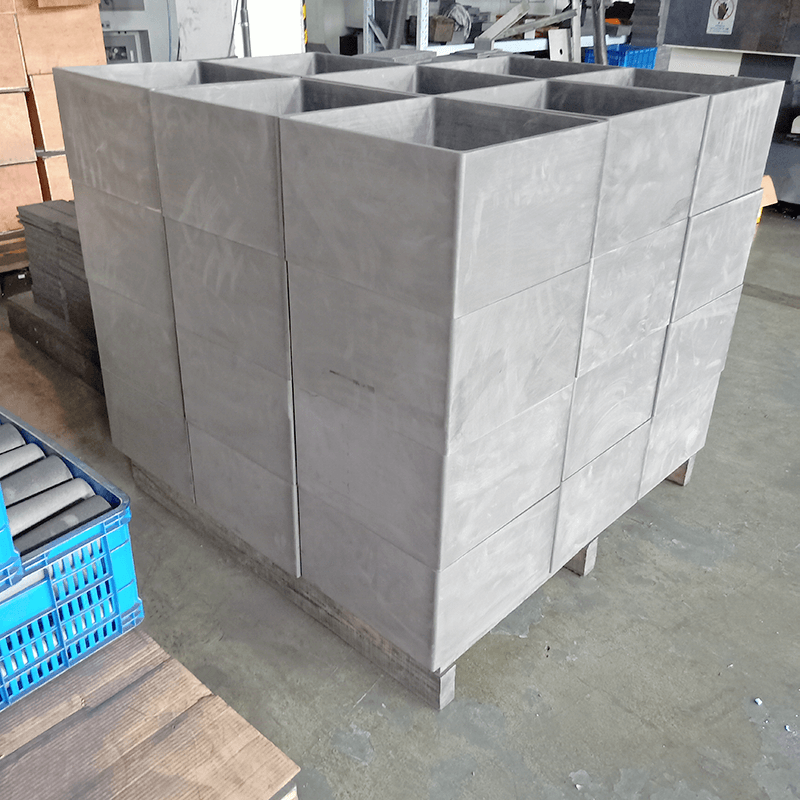
The physical dimensions of graphite saggers directly dictate operational bottlenecks during anode material graphitization. A minor miscalculation in wall thickness immediately impacts energy consumption, batch yield, and thermal consistency.

High-temperature calcination of battery anode materials requires strict contamination control and extreme thermal stability. Graphite containers endure punishing furnace environments to protect these sensitive materials from degradation.

 +86-795-4605783
  sales@nhdcarbon.com
  No. 966 of Tiangong South Avenue, High-tech Industrial Park, Fengxin County, Yichun City, Jiangxi Province, China.


